
Fresh Fruits

Pear

Pear

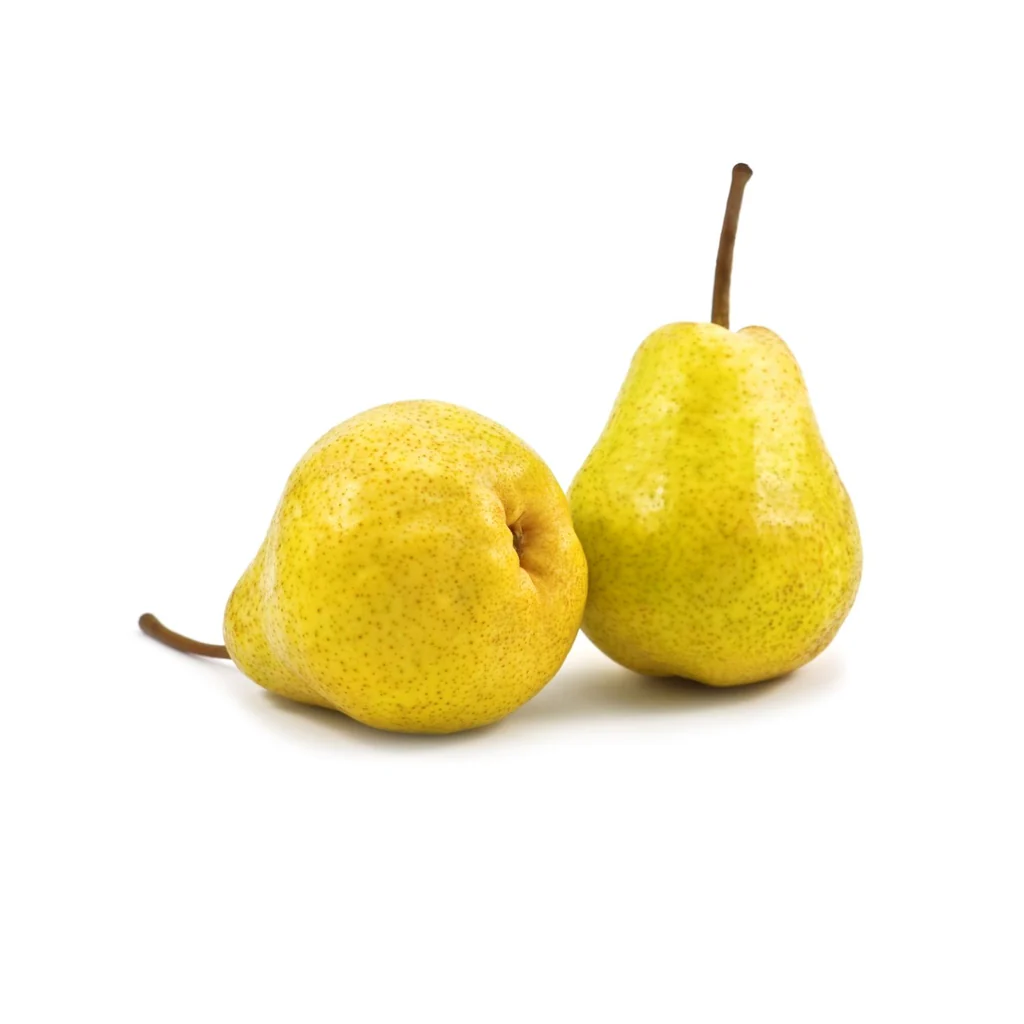
Pear is a sweet, juicy, and refreshing fruit that belongs to the Pyrus genus in the family Rosaceae. Native to Europe and Asia, pears are now widely cultivated across temperate regions worldwide. The fruit is typically bell-shaped, though its size, shape, and skin color can vary — ranging from green, yellow, red, to brown.

The flesh of the pear is soft, smooth, and grainy, with a mildly sweet flavor and high water content, making it very refreshing. Pears are rich in dietary fiber, vitamin C, potassium, and antioxidants, which contribute to overall health.

They are commonly consumed fresh, canned, or dried, and also used in juices, jams, salads, and desserts. Because of their natural sweetness, pears are also a popular ingredient in baby food and baked goods.

Enquire Now
Product Name
Pear
Botanical Name
Pyrus communis (European Pear), Pyrus pyrifolia (Asian Pear)
Family
Rosaceae
Shape & Size
Bell-shaped to round; 6–10 cm length
Skin Color
Green, yellow, red, or brown depending on variety
Flesh
Soft, juicy, smooth, mildly grainy
Taste
Sweet, mild, refreshing
Grades
Extra Class / Class I / Class II (as per export standards)
Size Calibration
Small (100–150 g), Medium (150–250 g), Large (250–350 g+)
Storage Temperature
0–4°C with 90–95% relative humidity
Shelf Life
Fresh: 1–2 weeks refrigerated; 3–5 days at room temperature
Bartlett (Williams)
Green when unripe, turns yellow when ripe.
Sweet, juicy, and aromatic; ideal for fresh consumption and canning.
Bosc
Brownish skin with elongated neck.
Crisp and dense flesh; good for baking and poaching.
Anjou (Red and Green)
Egg-shaped, smooth skin; green or red varieties.
Mildly sweet; eaten fresh or in salads.
Comice
Round, greenish-yellow skin with red blush.
Very sweet and juicy; ideal for fresh eating and desserts.
Seckel
Small, round, and reddish-brown skin.
Sweet and dense flesh; often called “sugar pear.”
Asian Pear (Pyrus pyrifolia)
Round like an apple, crisp texture, lightly sweet.
Popular in East Asia; eaten fresh or in salads.
Fresh Consumption
Eaten raw as a snack or in fruit salads.
Juices & Smoothies
Blended for refreshing drinks.
Baking & Cooking
Used in pies, tarts, crumbles, and poached desserts.
Canning & Preserves
Processed into canned pears, jams, and jellies.
Dried Pears
Used as a nutritious snack or in cereals.
Salads & Garnishes
Adds sweetness and crunch to salads and platters.
Sauces & Purees
For desserts, baby food, and culinary recipes.
Fermented Products
Used to make pear cider or wine.
Cosmetic Use
Extracts used in skin and hair products due to antioxidant content.
Nutraceuticals
Pear-based powders or extracts for health supplements.
1. Rich in Dietary Fiber
2. Boosts Immunity
3. Supports Heart Health
4. Aids Weight Management
5. Promotes Healthy Skin
6. Regulates Blood Sugar
7. Anti-Inflammatory Properties
8. Supports Bone Health
9. Hydration
10. Detoxification