

Fresh Fruits

Dragon Fruit

Dragon Fruit

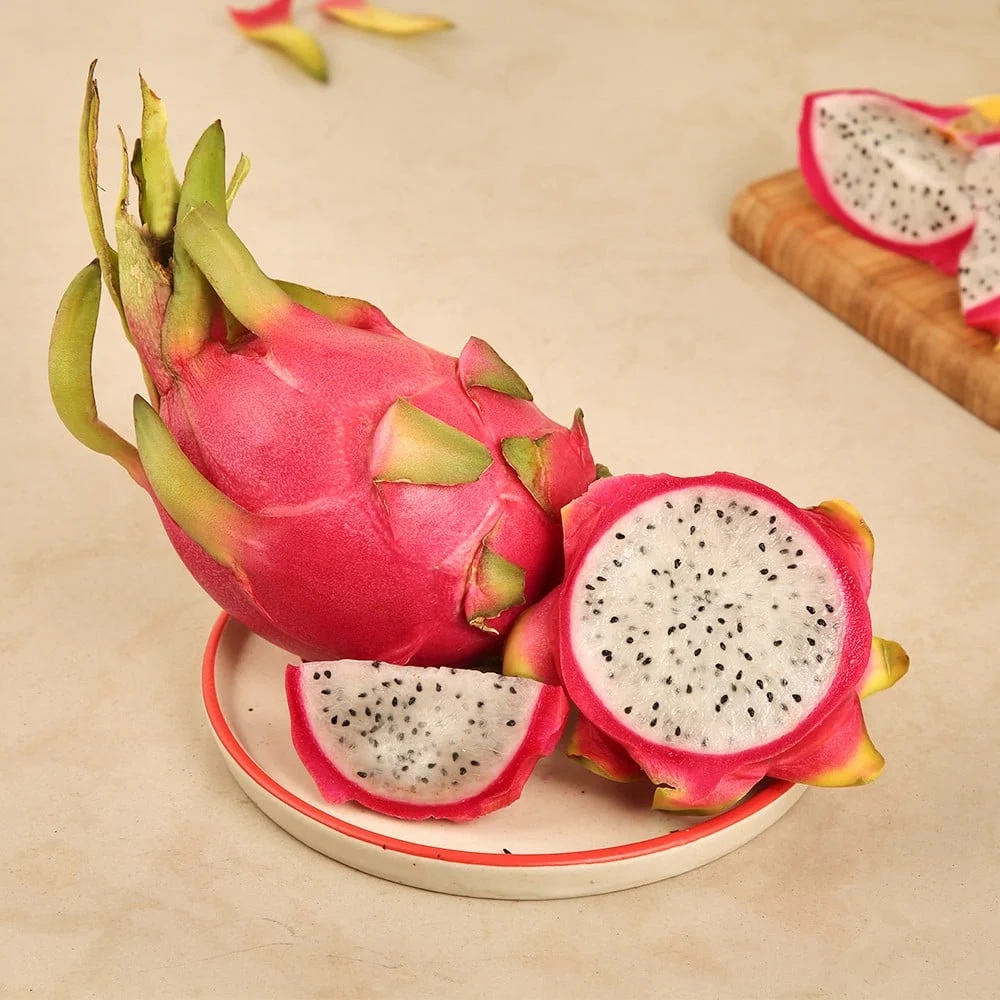
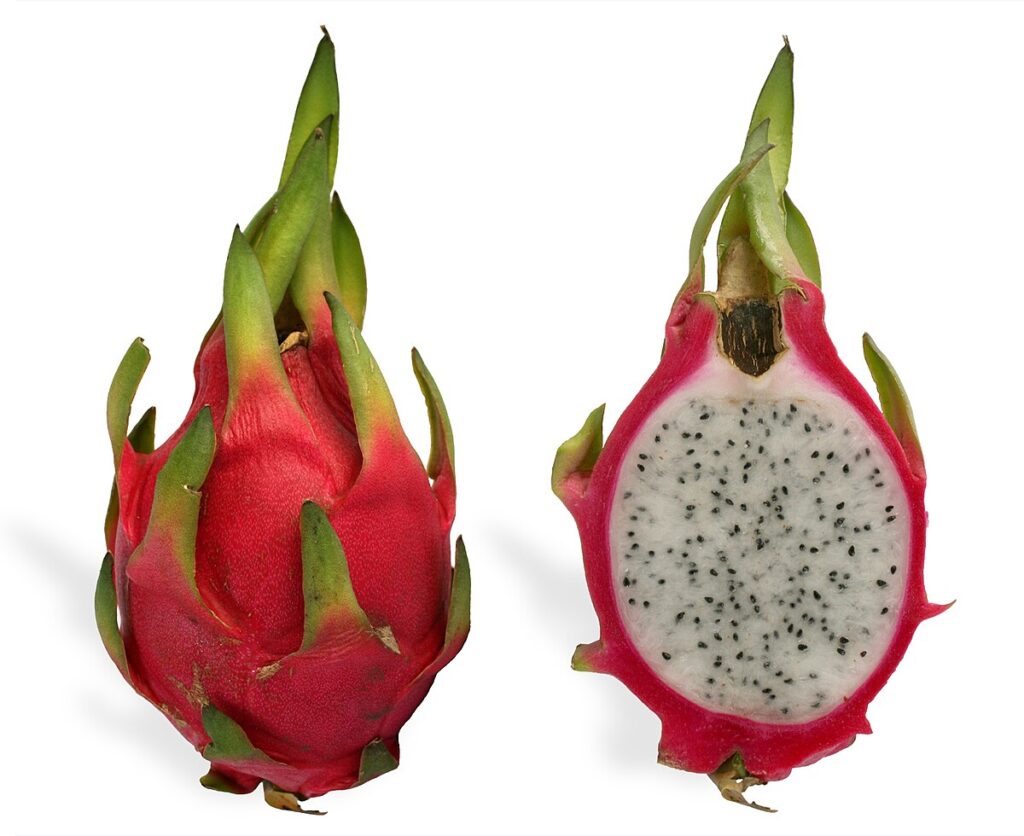
Dragon fruit, also known as Pitaya, belongs to the Cactaceae family and is a tropical cactus fruit. It is oval to pear-shaped, with bright pink, red, or yellow skin and green-tipped scales, giving it a striking “dragon-like” appearance. The flesh is white, red, or pink, speckled with tiny edible black seeds, and has a mildly sweet, refreshing taste with a crunchy texture.

Dragon fruit is rich in vitamins C and B, antioxidants, dietary fiber, and minerals like magnesium and iron. It is cultivated mainly in tropical and subtropical regions, and valued both for its aesthetic appeal and nutritional benefits. The fruit is commonly eaten fresh, in smoothies, fruit salads, desserts, or used as a natural food coloring and in health products.

Enquire Now
Product Name
Dragon Fruit / Pitaya
Botanical Name
Hylocereus undatus, Hylocereus polyrhizus, Hylocereus megalanthus
Family
Cactaceae
Shape & Size
Oval to pear-shaped; 200–600 g per fruit
Skin Color
Bright pink, red, or yellow with green-tipped scales
Flesh
White, red, or pink; juicy with tiny edible black seeds
Taste
Mildly sweet, refreshing
Grades
Extra Class / Class I / Class II (as per export standards)
Size Calibration
Small (200–300 g), Medium (300–450 g), Large (450–600 g+)
Storage Temperature
7–10°C with 90–95% relative humidity
Shelf Life
7–10 days in cold storage; 2–3 days at room temperature
1. Hylocereus undatus (White-Fleshed Pitaya)
Pink or red skin with white flesh and black seeds.
Mildly sweet and commonly consumed fresh.
2. Hylocereus costaricensis / Hylocereus polyrhizus (Red-Fleshed Pitaya)
Red or pink skin with red flesh and black seeds.
Sweeter than white-fleshed varieties; used fresh, in juices, and desserts.
3. Hylocereus megalanthus (Yellow Pitaya)
Yellow skin with white flesh and small black seeds.
Sweeter and less acidic; popular in export markets.
4. Hybrid Varieties
Developed for higher yield, better sweetness, and disease resistance.
Commonly used for fresh consumption and commercial processing.
5. Local / Regional Varieties
Smaller or less sweet varieties cultivated locally.
Often used in traditional dishes, jams, or local markets.
Fresh Consumption
Eaten raw by scooping the pulp with a spoon.
Juices & Smoothies
Blended into drinks, cocktails, and smoothies.
Desserts & Ice Creams
Used in puddings, cakes, sorbets, and fruit salads.
Jams & Jellies
Processed into preserves for year-round use.
Frozen Fruit / Puree
Used in beverages, ice creams, and smoothie bowls.
Culinary Uses
Added to salads, sauces, and tropical dishes for color and flavor.
Nutraceuticals & Supplements
Extracts used for antioxidants and health products.
Cosmetic Applications
Used in skincare products for hydration and antioxidant benefits.
Natural Food Coloring – Red or pink flesh used as a natural dye in foods.
Seed Oil / Industrial Use – Dragon fruit seeds are a source of oil rich in fatty acids.
1. Rich in Antioxidants
2. Boosts Immunity
3. Aids Digestion
4. Supports Heart Health
5. Supports Weight Management
6. Regulates Blood Sugar
7. Promotes Healthy Skin
8. Improves Bone Health
9. Enhances Iron Levels
10. Hydration & Detoxification