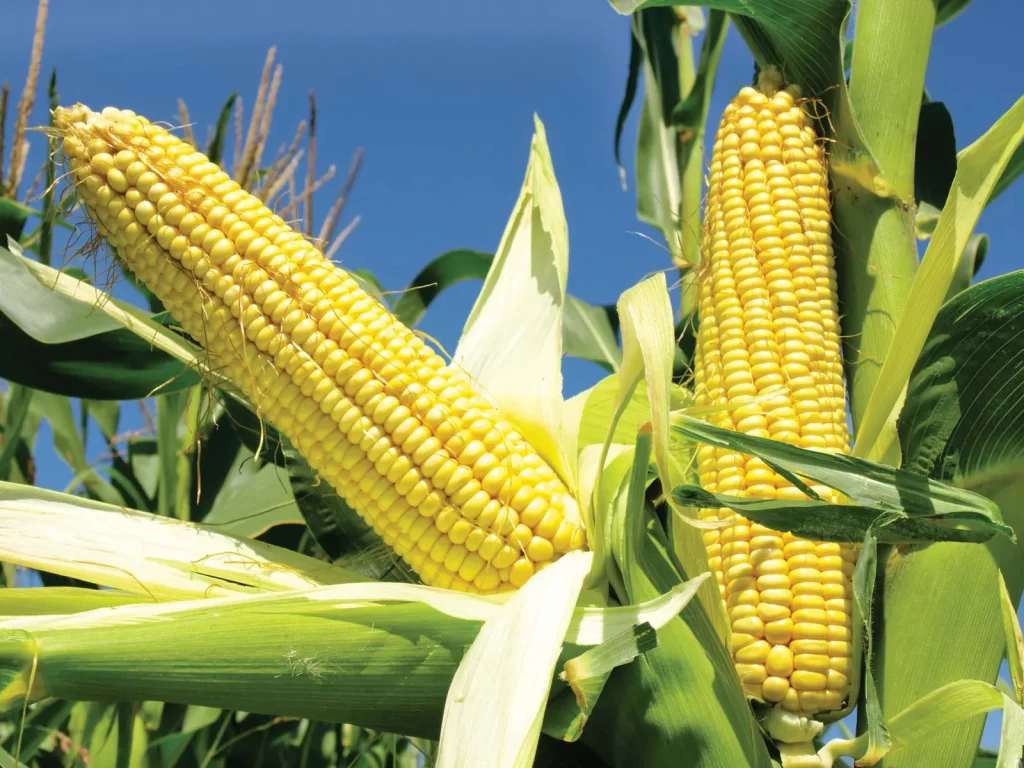
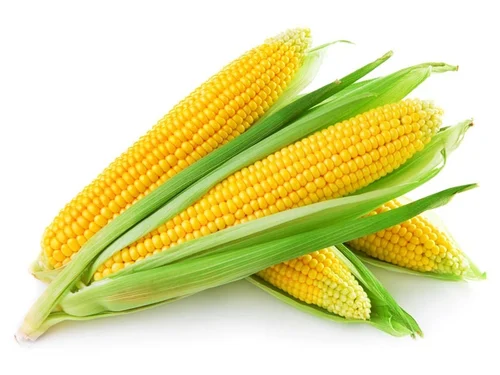
Product Name
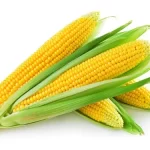
Corn / Maize / Sweet Corn / Field Corn
Scientific Name
Zea mays
Family
Poaceae (Grass family)
Types Available
Sweet Corn, Dent Corn, Flint Corn, Flour Corn, Popcorn, Waxy Corn
Form
Whole kernels (fresh, dried, frozen), flour, meal, starch, oil
Color
Yellow (common), also white, red, purple, multicolored
Flavor
Mildly sweet to starchy, depending on type
Moisture Content
12–14% (dried grain); 70–75% (fresh sweet corn)
Nutritional Value
Rich in carbohydrates, dietary fiber, protein, vitamins (A, B-complex, C, E), minerals (Mg, P, K, Fe, Zn)
Packaging
PP bags, jute bags, vacuum-sealed packs, or frozen/canned (as per demand)
Storage Condition
Cool, dry, and ventilated place (for grains); frozen/canned for sweet corn
Shelf Life
Dried corn: 9–12 months; Fresh sweet corn: 3–5 days; Frozen: up to 12 months
Common Uses
Human consumption (flour, starch, oil, snacks), animal feed, biofuel, industrial products
Harvest Season
Kharif (monsoon) and Rabi (winter) seasons, depending on region